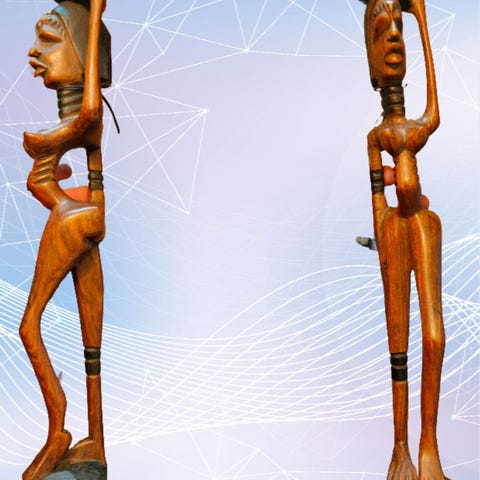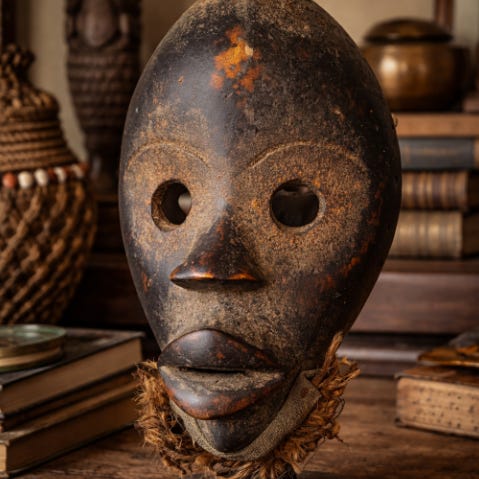
Bildgalleri
(1/3)
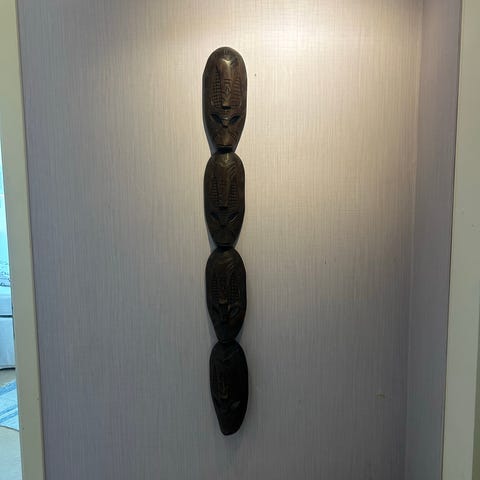
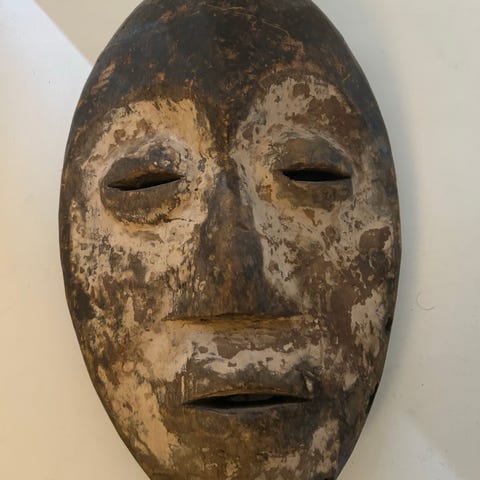
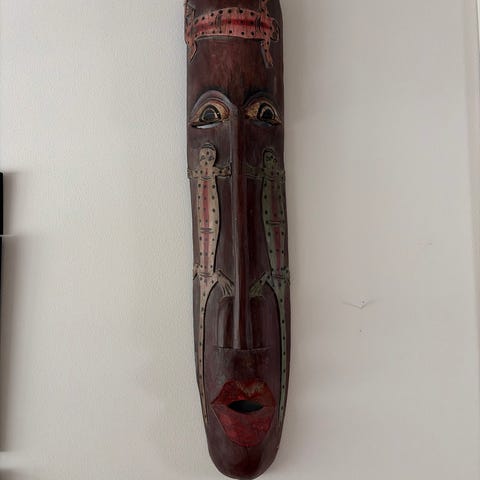
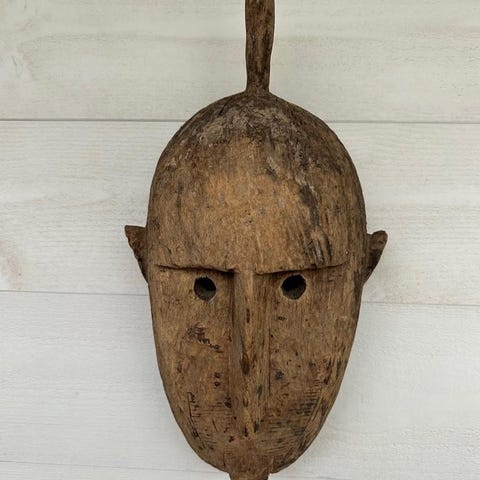
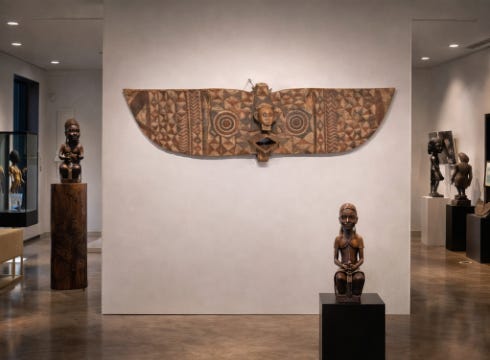
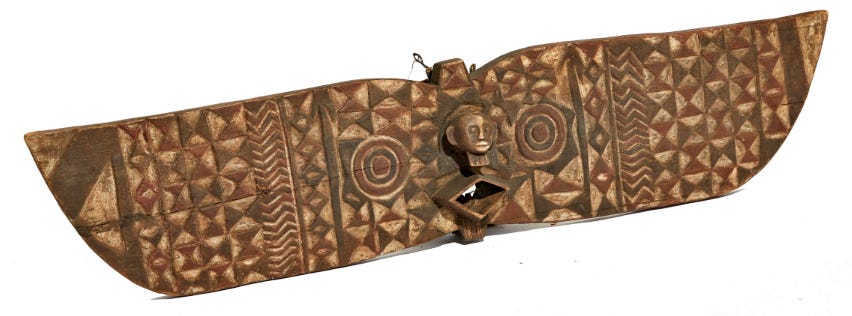
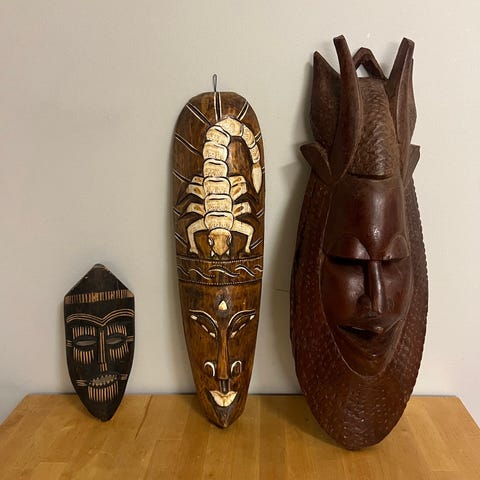
Stor afrikansk ritualmask, Bwa/Nuna, Burkina Faso
Säljes
7 800 kr
Frakt från 179 kr + köpskydd 276 kr
Trygga affärer med Frakt med köpskydd
Efter leveransen har du 24 timmar på dig att inspektera varan. Om något är fel med den får du pengarna tillbaka
Skapa ett paket
Köp fler varor från säljaren och betala bara för frakten en gång.
Varubeskrivning
Skick: Bra skick - varsamt använd
Imponerande och ovanlig afrikansk ritualmask från Bwa/Nuna-folket i Burkina Faso. Skuren i trä med geometrisk reliefdekor och bemålad/svärtad i jordfärger. Vacker åldrad patina och tydliga spår av rituel användning.
Masker av denna typ användes av Bwa i traditionsenliga ceremonier under torrperioden, där de representerade olika bushandar och skyddsandar. De stora plankmaskerna (nwantantay) är särskilt typiska för de södra Bwa, som tog över Nuna-religionens bruk av trämasker kring sekelskiftet 1900.
Ursprung: Bwa eller Nuna, Burkina Faso
Datering: troligen rund 1950
Material: skuret och bemålat/svärtat trä
Mått: höjd ca 32 cm, längd ca 154 cm
Skick: åldersrelaterat slitage, spår av bruk, i övrigt gott samlar-skick
Proveniens: Professor Finn Wilhelmsen (1939–2013), därefter privat ägo
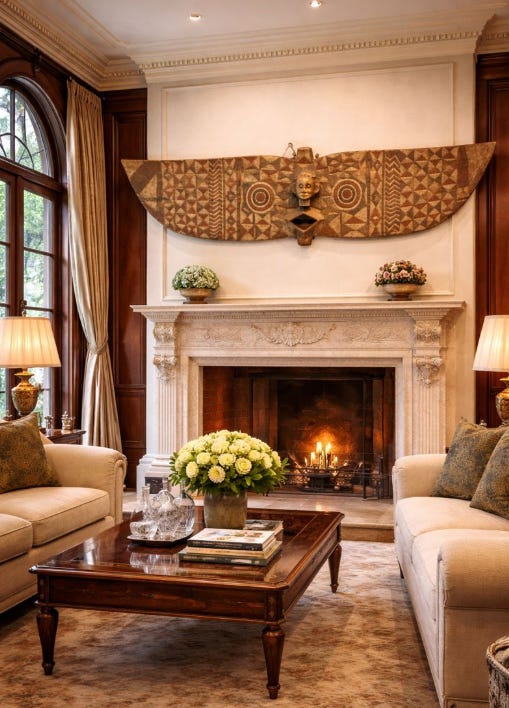
Passar både samlare av afrikansk konst och som starkt dekorativt objekt i ett modernt hem eller galleri.
Kan hämtas på plats eller skickas väl emballerad mot fraktkostnad.
PROVENIENS Professor Finn Wilhelmsen (1939-2013)
Privat eie
BWA
The Bwa or Bwaba (plural),or Bobo-Wule (Bobo-Oule), are an ethnic group indigenous to central Burkina Faso and Mali. Their population is approximately 300,000. They are known for their use of masks, made from leaves or wood, used in performative rituals.
The Bwa are well known for their use of traditional tribal masks. The masks, made from wood and leaves, are used in traditional rituals. In particular the Southern Bwa are known for their tall plank masks, known as nwantantay, and tend to use wood to make their masks. This is a result of their adoption of Nuna religion and their traditions of using wooden masks. About 1897, after a series of disasters, including the arrival of the French and their Senegalese mercenaries, the Bwa decided God had abandoned them, so they turned to their Nuna neighbors and purchased the rights to use, wear, and carve wooden masks, their costumes, and the songs and dances that go with them. The religion associated with wooden masks is focused on the spirit Lanle, whose power is manifested through the wooden masks. The northern Bwa use leaf masks more than wooden ones. These leaf masks frequently represent Dwo in religious ceremonies.The masks also represent the bush spirits including serpents, monkeys, buffalo and hawks. Mask performances generally take place in the dry season between February and May.
Like many of their neighbours, the Bwa are predominantly farmers, their main cash crop being cotton. They also farm millet, rice, sorghum, yams, and peanuts. Bwa villages are autonomous and they do not recognise any outside political authority. They are led by a council of male elders who make all the major decisions. Villages are structured with a cluster of mud walled buildings around a central space where livestock are guarded at night.
Transport - lösning direkt med köparen.
Användarprofil

Du måste vara inloggad för att se användarprofiler och skicka meddelanden.
Annonsens metadata
Senast ändrad: 2026-09-22 kl. 13:38 ・ Annons-ID: 19015540